, which is why the UI half lives in panel.ts at the "page" stage.
A11Y_CSS is effects.css, passed in as a string argument by the integration.
========================================================================== */
try {
var W = window;
var D = document;
var H = D.documentElement;
/* Bail. /admin and /login are operator-only SSR surfaces that run their own
dark-mode system (src/layouts/Layout.astro), and data-a11y-disable is the
documented client escape hatch. On a bail we return WITHOUT defining
window.a11y — that absence is the single signal panel.ts keys on, so it
also covers this file having thrown. */
if (/^\/(admin|login)(\/|$)/.test(W.location.pathname)) return;
if (H.hasAttribute("data-a11y-disable")) return;
var KEY = "a11y:prefs";
var VERSION = 1;
/* Every value is a string enum, never a boolean: costs nothing today and
lets a future third state land without a storage migration.
`always:1` means the attribute is present whatever the value, so clients
test one thing (data-a11y-motion) rather than presence-or-value. */
var DEFS = [
{ k: "motion", attr: "data-a11y-motion", on: "reduce", off: "allow", os: "(prefers-reduced-motion: reduce)", always: 1 },
{ k: "links", attr: "data-a11y-links", on: "underline", off: null },
{ k: "spacing", attr: "data-a11y-spacing", on: "loose", off: null },
{ k: "font", attr: "data-a11y-font", on: "readable", off: null },
{ k: "focus", attr: "data-a11y-focus", on: "strong", off: null },
{ k: "contrast", attr: "data-a11y-contrast", enums: ["standard", "high"], off: null, os: "(prefers-contrast: more)", osValue: "high" },
{ k: "scheme", attr: "data-a11y-scheme", enums: ["light", "dark"], off: null, os: "(prefers-color-scheme: dark)", osValue: "dark" }
];
/* side + min are host-only: stored here, applied by panel.ts. They get no
attribute on because nothing in client CSS should key on them. */
var HOST = { side: ["start", "end"], min: ["yes"] };
/* ---- storage -----------------------------------------------------------
localStorage throws outright in some privacy modes, so every access is
wrapped and falls back to an in-memory object: the panel still works for
the session, it just does not persist. */
var mem = null;
var memOn = false;
function rawRead() {
if (memOn) return mem;
var s;
try { s = W.localStorage.getItem(KEY); } catch (e) { memOn = true; return mem; }
if (s == null) return null;
var o;
try { o = JSON.parse(s); } catch (e) { return null; }
if (!o || typeof o !== "object") return null;
if (Object.prototype.toString.call(o) === "[object Array]") return null;
if (typeof o.v !== "number") return null;
return o;
}
function rawWrite(o) {
if (!memOn) {
try { W.localStorage.setItem(KEY, JSON.stringify(o)); return; } catch (e) { memOn = true; }
}
mem = o;
}
/* Effective preferences. A future version is IGNORED but never deleted, so
rolling the build back loses nothing. A past version would migrate here. */
function prefs() {
var o = rawRead();
if (!o) return {};
if (o.v > VERSION) return {};
return o;
}
/* ---- resolution --------------------------------------------------------
explicit stored value > OS media query > built-in default
Never write a value just because the OS said so. Persisting a detected
value makes "unset" indistinguishable from "chosen" and the site stops
tracking the OS forever — the bug that silently kills OS-following. */
function mq(q) {
try { return W.matchMedia(q); } catch (e) { return null; }
}
function mqOn(q) {
var m = mq(q);
return !!(m && m.matches);
}
function defOf(k) {
for (var i = 0; i < DEFS.length; i++) { if (DEFS[i].k === k) return DEFS[i]; }
return null;
}
function allowed(d, v) {
var list = d.enums;
if (list) {
for (var i = 0; i < list.length; i++) { if (list[i] === v) return true; }
return false;
}
return v === d.on || v === d.off;
}
function hostAllowed(k, v) {
var list = HOST[k];
if (!list) return false;
for (var i = 0; i < list.length; i++) { if (list[i] === v) return true; }
return false;
}
function resolved(k) {
var p = prefs();
var v = p[k];
var d = defOf(k);
if (!d) return hostAllowed(k, v) ? v : null;
if (v != null && allowed(d, v)) return v;
if (d.os && mqOn(d.os)) return d.osValue || d.on;
return d.off;
}
function apply() {
for (var i = 0; i < DEFS.length; i++) {
var d = DEFS[i];
var v = resolved(d.k);
if (v == null) H.removeAttribute(d.attr);
else H.setAttribute(d.attr, v);
}
}
/* ---- effects sheet ----------------------------------------------------
Inserted unconditionally: predictability beats micro-optimisation, and
every selector is gated on a root attribute that fails immediately when
absent, so the universal-selector motion rules cost nothing when motion
resolves to "allow". */
function injectCss() {
if (D.getElementById("a11y-effects")) return;
var s = D.createElement("style");
s.id = "a11y-effects";
s.appendChild(D.createTextNode(A11Y_CSS));
(D.head || H).appendChild(s);
}
function fire(k) {
try {
D.dispatchEvent(new W.CustomEvent("a11y:change", {
detail: {
key: k,
value: k == null ? null : prefs()[k],
resolved: k == null ? null : resolved(k)
}
}));
} catch (e) {}
}
function set(k, v) {
if (v != null) {
var d = defOf(k);
if (d ? !allowed(d, v) : !hostAllowed(k, v)) return;
}
var stored = rawRead();
/* A stored version ahead of ours cannot be safely merged, so the first
explicit change replaces it wholesale. Acceptable: the user is actively
choosing at that moment. Otherwise read-modify-write preserves unknown
keys so a newer build's settings survive a rollback. */
var future = !!(stored && stored.v > VERSION);
var o = future || !stored ? {} : stored;
o.v = VERSION;
if (v == null) delete o[k];
else o[k] = v;
rawWrite(o);
apply();
fire(k);
}
function reset() {
if (!memOn) {
try { W.localStorage.removeItem(KEY); } catch (e) { memOn = true; }
}
mem = null;
apply();
fire(null);
}
apply();
injectCss();
var api = {
version: VERSION,
get: function (k) { return prefs()[k]; },
resolved: resolved,
set: set,
reset: reset,
motionReduced: function () { return resolved("motion") === "reduce"; }
};
/* caps is a LIVE getter and is never read pre-paint. In a production build
the client CSS is a before this script and a classic blocking
script waits on pending stylesheets, so getComputedStyle would resolve —
but under `astro dev` the CSS arrives through Vite's module graph and a
pre-paint read can return empty. That failure would be silent and
byte-identical to a client that never opted in. Nothing pre-paint needs
capabilities: the gated fieldsets live in the lazily-imported panel body. */
try {
Object.defineProperty(api, "caps", {
enumerable: true,
get: function () {
var raw = "";
try {
raw = getComputedStyle(H).getPropertyValue("--a11y-caps") || "";
} catch (e) {}
/* getPropertyValue returns the token stream verbatim, leading space and
literal quotes included, so a naive split yields ["", "\"contrast",
"dark\""] and every capability check silently fails. */
return raw.replace(/["']/g, " ").replace(/^\s+|\s+$/g, "").split(/\s+/)
.filter(function (t) { return !!t; });
}
});
} catch (e) {
api.caps = [];
}
W.a11y = api;
/* While a key is absent the OS query is authoritative and LIVE. Once the
user has chosen, an OS change must not move the site under them. */
for (var i = 0; i < DEFS.length; i++) {
(function (d) {
if (!d.os) return;
var m = mq(d.os);
if (!m) return;
var onChange = function () {
if (prefs()[d.k] != null) return;
apply();
fire(d.k);
};
if (m.addEventListener) m.addEventListener("change", onChange);
else if (m.addListener) m.addListener(onChange);
})(DEFS[i]);
}
try {
W.addEventListener("storage", function (e) {
if (e && e.key && e.key !== KEY) return;
mem = null;
memOn = false;
apply();
fire(null);
});
} catch (e) {}
} catch (e) {}
})("/* ============================================================================\n a11y effects sheet.\n\n Injected pre-paint by boot.js as the LAST node in
.\n ------------------------------------------------------------------------- */\n:root[data-a11y-spacing=\"loose\"]\n :is(main, article, footer, [role=\"main\"], [role=\"contentinfo\"])\n :is(p, li, dd, dt, blockquote, figcaption, summary, td, th):not(nav *) {\n line-height: 1.5 !important;\n letter-spacing: 0.12em !important;\n word-spacing: 0.16em !important;\n overflow-wrap: break-word !important;\n min-width: 0;\n}\n:root[data-a11y-spacing=\"loose\"]\n :is(main, article, footer, [role=\"main\"], [role=\"contentinfo\"])\n :is(p, blockquote, figcaption):not(nav *) { margin-block-end: 2em !important; }\n\n/* ---------- Readable font (prose only) -------------------------------------\n Honest scope: this switches PROSE type to the system stack. The strongest\n real win is a client's condensed display face — on 4bkstorage that is\n --f-display, a \"Google Sans Flex Cond\" family pinned to a 75% width axis,\n used for every heading inside main/footer.\n\n It deliberately does NOT touch letter-spacing (the spacing setting owns\n that) and does NOT touch text-transform: killing uppercase would render the\n brand as \"bk storage\" — misrepresentation, not accessibility. Nav micro-\n labels (.brand-l2 :397, .sheet-title :516) are out of scope by the header\n rule above; that is the price of deleting the header regression, and it is\n the right trade.\n\n `font-stretch: normal` and `font-variation-settings: normal` are NOT set,\n and must not be: a client may pin a variable font's width axis with a\n `font-stretch` DESCRIPTOR inside @font-face rather than a declaration on the\n element (4bkstorage does exactly this to get a condensed display family and a\n normal body family out of one file). A descriptor belongs to the @font-face,\n so replacing font-family drops the pinned width along with it. Resetting\n those properties here would instead fight any client that legitimately sets\n them on elements, for no gain.\n\n CONTRACT NOTE for clients: if you set `font-variation-settings` on ELEMENTS\n rather than as an @font-face descriptor, this override cannot reset it and\n the system stack may inherit meaningless axis values. Pin axes in\n @font-face.\n\n Ligatures: `none` includes `no-contextual`, which breaks Arabic and several\n Indic scripts. Narrowed to the three Latin-disambiguation families only.\n ------------------------------------------------------------------------- */\n:root[data-a11y-font=\"readable\"]\n :is(main, article, footer, [role=\"main\"], [role=\"contentinfo\"]),\n:root[data-a11y-font=\"readable\"]\n :is(main, article, footer, [role=\"main\"], [role=\"contentinfo\"])\n *:not(code, pre, kbd, samp, svg, svg *, iframe, nav, nav *, a11y-prefs, a11y-prefs *) {\n font-family: var(--a11y-readable-stack,\n system-ui, -apple-system, \"Segoe UI\", Roboto, \"Helvetica Neue\", Arial, sans-serif) !important;\n font-variant-ligatures: no-common-ligatures no-discretionary-ligatures\n no-historical-ligatures !important;\n}\n\n/* ---------- Strong focus ---------------------------------------------------\n White halo hugged by a black outline. Verified on 4bkstorage's palette:\n #fff is 13.69:1 on --navy #0c2e54 and 11.43:1 on --deep #0f3a6b; #000 is\n 21:1 on white. So one edge always clears SC 1.4.11's 3:1 whatever it lands\n on. GOV.UK yellow alone would not (#ffdd00 is 1.35:1 on white).\n\n !important is mandatory: .field input:focus{outline:none} (bkstorage.css\n :1489-1495) is (0,2,1) and beats :root[data-a11y-focus] :focus-visible at\n (0,2,0) — it would kill the ring on exactly the form fields where it matters\n most.\n\n NO border-radius declaration. At (0,3,0) it would outrank .btn's 11px\n (:265) and .btn-lg's var(--radius) (:275) and snap every focused button to a\n near-square on focus and back on blur. `outline` follows the element's own\n border shape in every current engine, which is the desired result for free.\n\n offset 2px + a 2px halo (5px total beyond the border box, was 7px) plus\n scroll-margin, because the ring is drawn inside the client's own clipping\n ancestors: .hero (:592), .type (:947), .cta (:1296), and body{overflow-x:\n hidden} (:134).\n ------------------------------------------------------------------------- */\n:root[data-a11y-focus=\"strong\"] :focus-visible {\n outline: 3px solid #000 !important;\n outline-offset: 2px !important;\n box-shadow: 0 0 0 2px #fff !important;\n scroll-margin: 12px;\n}\n@media (forced-colors: active) {\n :root[data-a11y-focus=\"strong\"] :focus-visible {\n outline-color: Highlight !important;\n box-shadow: none !important;\n }\n}\n\n/* ---------- Panel plumbing ------------------------------------------------\n No scroll lock. `:root{overflow:hidden}` was deleted: 4bkstorage's\n body{overflow-x:hidden} (:134) makes viewport-overflow propagation\n engine-dependent, and iOS Safari — the only platform where the bottom-sheet\n layout exists — ignores overflow:hidden for touch scrolling. It was\n unverifiable behaviour that changed the page under the user and contradicted\n the non-modal ruling. overscroll-behavior:contain on the sheet plus\n focusout-closes at <=40rem replaces it. Never write body.style.overflow:\n both clients' Nav.tsx reset it to \"\" unconditionally (4bkstorage :29-32,\n rockin2ind :40-43) and whichever closed last would destroy the other's lock.\n ------------------------------------------------------------------------- */\n@media print { a11y-prefs { display: none !important; } }\n");
Skip to content
We design your site with you, build it on Helium and put it live on your domain. Forms that keep every lead and analytics come with it, and your Neon stock can show on the page.
You don't need a designer, a developer or a host. We do all three. The build is quoted by the size of the site.
1
We talk it through
What you sell, rent or book, who your customers are, and what the site needs to do for them.
2
We design it
Your brand, your photos, your words. A design made for your business, not a theme with your logo on it.
3
We build it on Helium
Pages, forms, galleries and the Neon displays you want, set up and checked on phones, tablets and desktops.
4
It goes live on your domain
Add one DNS record. Certificates are issued automatically and renewed for you.
5
You run the day to day
Read form entries, edit your forms, update any galleries, reviews or listings your site has, and check your analytics. With Pages, you can build pages too.
6
We make the bigger changes
New pages, a new section, a redesign: ask us and we build it and put it live, quoted like the build.
On every Helium site
More than pages. A site that's connected.
Whatever the design, every site we build on Helium comes with the same foundation.
Your stock, on your site
Choose which Neon displays the site shows: products, rentals or bookings, with the fields and filters you set. They refresh about every five minutes.
Still up when Neon isn't
If Neon is slow or down, the site keeps showing the last good copy. Visitors never see an error.
Forms that keep every lead
Linked to Neon, every entry is stored in Neon, and if Neon can't be reached the site queues it and sends it later. Spam limits are built in, with an optional CAPTCHA.
Analytics without trackers
Page views, top pages, sources and devices, counted on your own server. Visitors who ask not to be tracked aren't counted.
Accessibility settings on every page
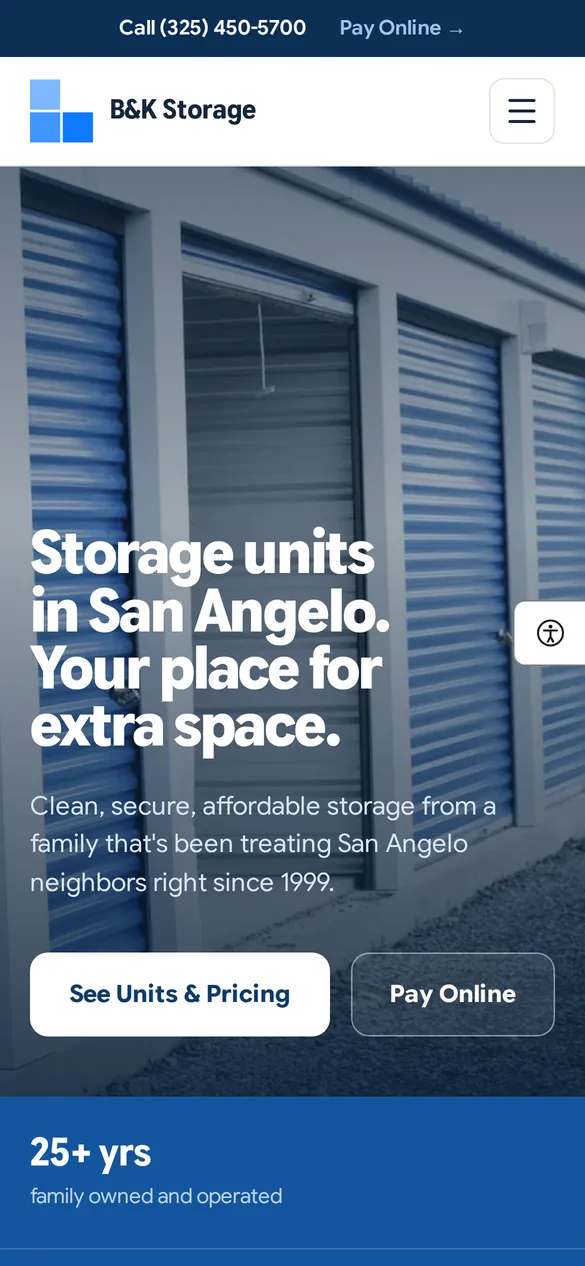
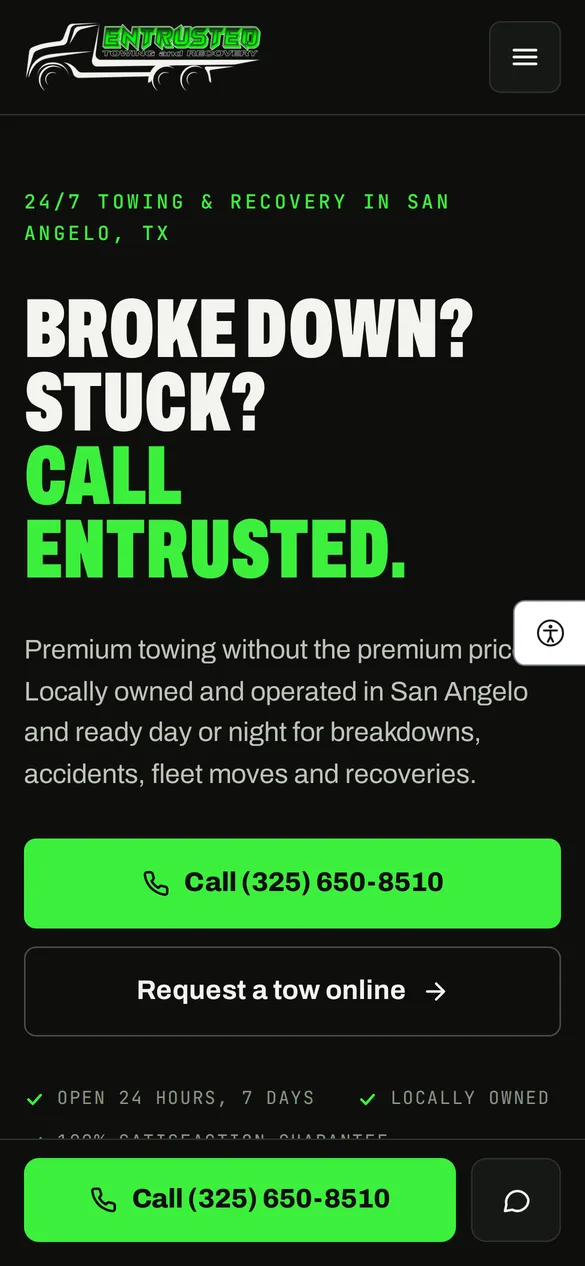
Visitors can reduce motion, underline links, space out text and switch to a readable font. Settings stay in their browser.
Your own database, and HTTPS
Each site runs on its own database, with certificates issued automatically and security headers on by default.
Studio · Alpha
Your site, built on from Neon.
On Growth, Pro and Enterprise, Neon's Forms and Pages modules publish straight to your Helium sites.
Build your own pages
Drag sections and blocks into place, embed forms and Neon Displays, and publish from a draft. A published page can replace an existing one, including your home page.
One theme for the whole site
Set colours, corners, fonts and content width. Saving restyles every published page on that site.
One form, every site
Build a form in Neon and show it on any number of Helium sites, with every entry in one inbox.

Something else? Ask us directly and a person will answer within a day.
Is a website included with Neon?
Yes. Every plan includes a website on Helium with your own domain and SSL.
Will you design and build it for me?
Yes. We design and build the site with you and put it live on your domain. The build is quoted by the size of the site.
Can I edit the site myself?
Yes. From the site admin you read form entries, edit your forms and their fields, update any galleries, reviews or listings your site has, and change settings. On Growth, Pro and Enterprise, Neon's Pages module lets you build and publish pages yourself, in alpha. Anything beyond that, we make for you.
Do form submissions go into Neon?
Yes, once the site is linked to Neon. Every entry is stored in Neon, including forms the site defines itself, and if Neon can't be reached the site queues the entry and sends it later.
Can I have more than one site?
Yes. Another site on Helium, for a second brand or location, is $19/mo on any plan.
Can my team sign in to the site with Neon?
Yes, on Enterprise. Click “Open admin” in Neon and you're signed in to the site admin, with access that follows your Neon roles. On Starter, Growth and Pro, your team signs in to the site admin with its own email and password, with optional two-factor codes by email.
Want a site like these?
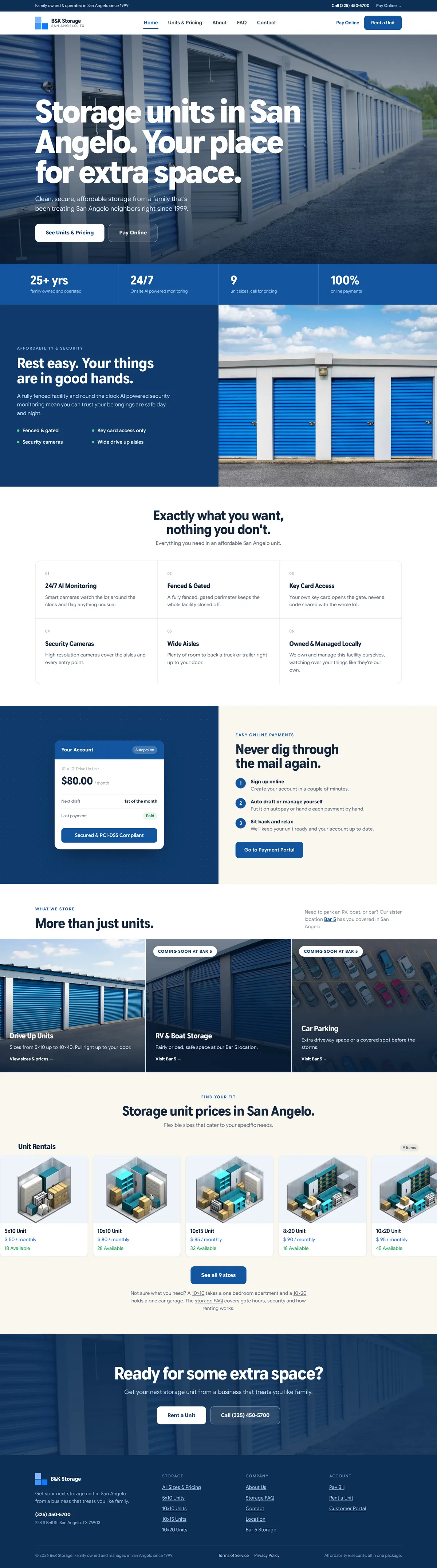
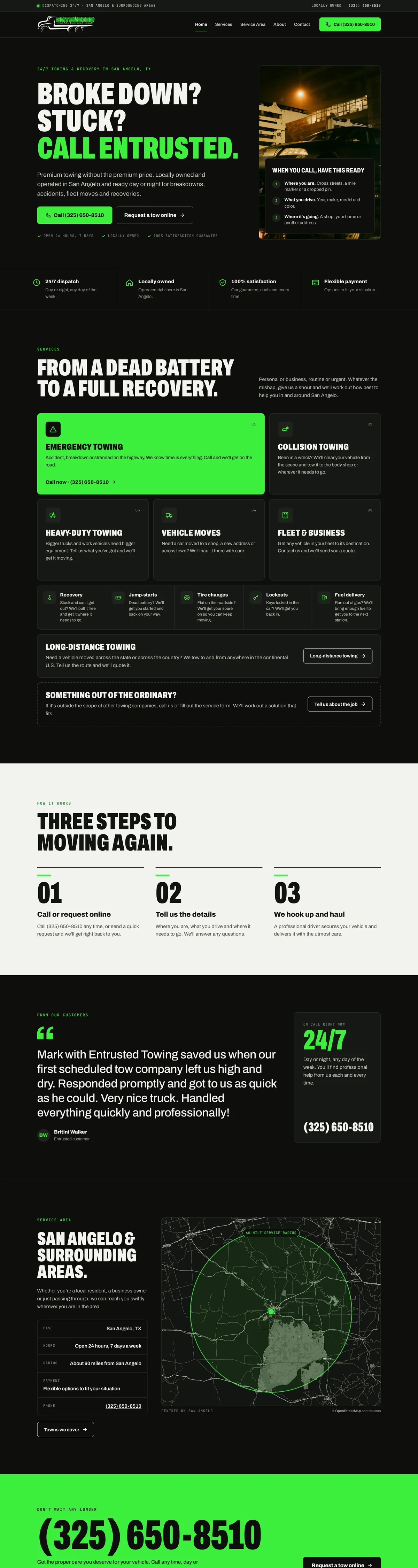
Tell us about your business and what you want the site to do. We'll design it, build it and put it live with you.